How it works
Five specialists run on your computer. Each has one job. Nothing reaches your Gmail without passing every one of them.
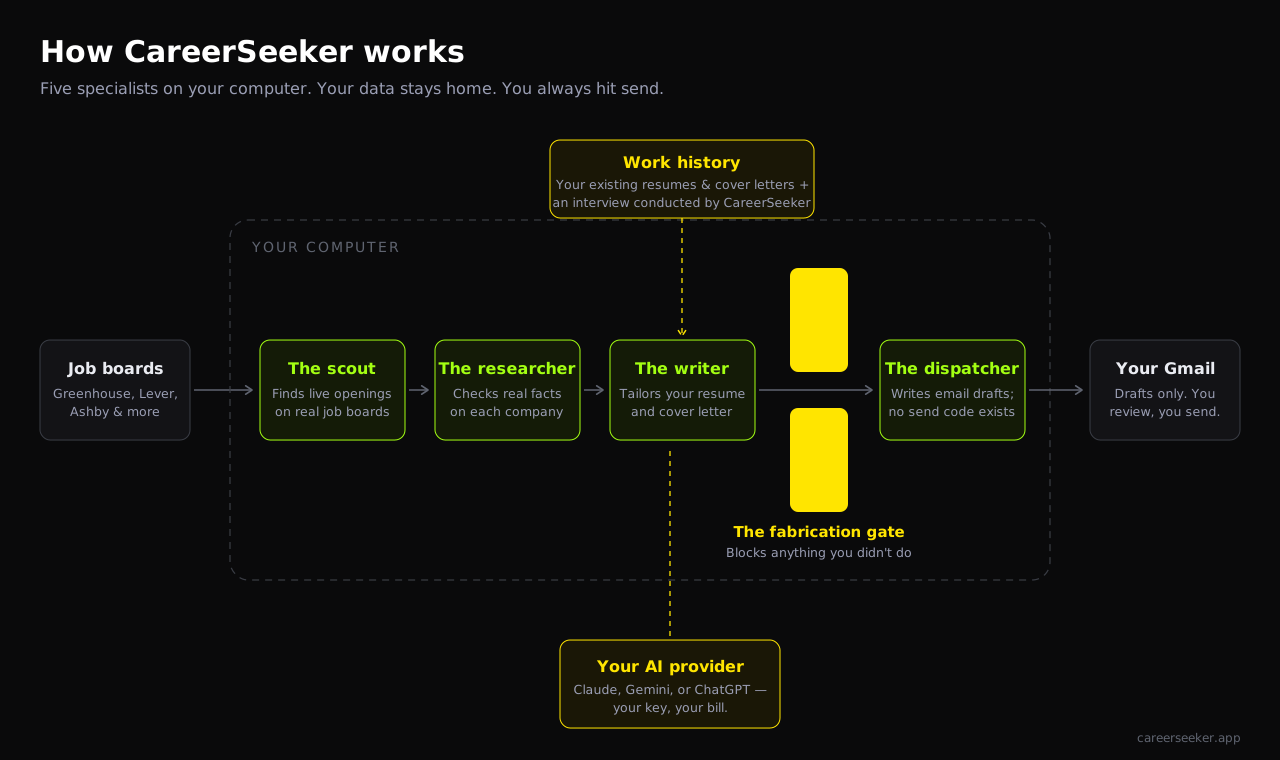
The scout
The scout watches real job boards — the systems companies actually hire through, like Greenhouse, Lever, and Ashby — and collects live openings that match what you told it you're looking for. No scraped junk, no expired listings.
The researcher
Before anything gets written, the researcher learns about the company: what they do, what they've shipped, what they say they value. Anything it can't verify, it throws away. Your cover letter mentions only things that are actually true about them.
The writer
The writer tailors your resume and cover letter for this specific job — reordering, emphasizing, and phrasing your real experience to fit what this employer is asking for. Tailored, never invented. Powered by your choice of Claude, Gemini, or ChatGPT.
The fabrication gate
The scariest thing about AI job tools is simple: what if it lies about you? CareerSeeker was built so it can't. Before any draft is created, every claim — every skill, every title, every date — is checked against what you actually told us during setup. Anything unsupported is blocked, and the application simply doesn't get made.
This isn't a policy we promise to follow. It's how the software is built: there is no path to a finished draft that skips the gate.
The dispatcher
The dispatcher assembles the approved materials into an email and places it in your Gmail drafts folder. That's the end of its job. It contains no way to send — reviewing and sending is always yours.
What it doesn't do
It doesn't send email — ever. It doesn't apply anywhere without your standing instructions. And it doesn't guarantee interviews: it makes every application you send your best one, but hiring is still hiring.